The essentials
- To choose an armchair, start by defining how it will be used: reading, chatting, watching a film or simply adding seating to the room.
- Then check its dimensions, distinguishing the overall footprint from the width and depth actually available for sitting.
- A comfortable armchair suits your body shape and preferred position: pay particular attention to the seat depth and height, the backrest and the armrests.
- Choose the upholstery for its appearance, feel and maintenance requirements: velvet, leather, rattan and fabric do not require the same care.
- Finally, consider the armchair alongside the rest of the room: it can extend the style of the sofa or introduce a more distinctive contrast.
To choose an armchair, start by defining how it will be used: reading, chatting, watching a film or simply providing extra seating. Then make sure its comfort suits the way you like to sit and that its dimensions fit into the room.
Its shape, colour and material matter too, but they come second: a successful armchair must first be suited to your everyday life.
Before discovering our armchair collection, here are the main criteria to compare when making your choice.
How do you choose an armchair?
The right armchair is one that suits your use, body shape, available space and interior style.
Before settling on its shape or colour, proceed in this order:
- Define its main use. An armchair intended for reading does not meet exactly the same needs as occasional seating in a living room.
- Measure the available space. Consider its width and depth, as well as the space needed around it to keep moving around easily.
- Check the seat dimensions. Seat depth, width and height directly affect your position.
- Look at the backrest and armrests. They should suit the way you like to sit.
- Choose the material and style. You can then refine your choice according to your tastes and everyday requirements.
A simple method is to compare the dimensions of the armchair you are interested in with those of a seat you already use and find comfortable.
What are the different types of armchairs?
Armchair names may refer to a shape or a function. When choosing, the most useful approach is therefore to start with the use you are looking for.
| Type of armchair | What characterises it | Recommended use and room |
|---|---|---|
| Club armchair | Padded volumes, generous armrests and an enveloping silhouette | Reading or chatting in a living room or office |
| Swivel armchair | Seat that turns on its base | Easily moving from one area to another in an open-plan living room |
| Rocking armchair | Base allowing a rocking motion | Enjoying some quiet time in a bedroom or reading corner |
| Outdoor armchair | Materials and finishes designed for outdoor use | Furnishing a terrace, balcony or outdoor space |
The club armchair
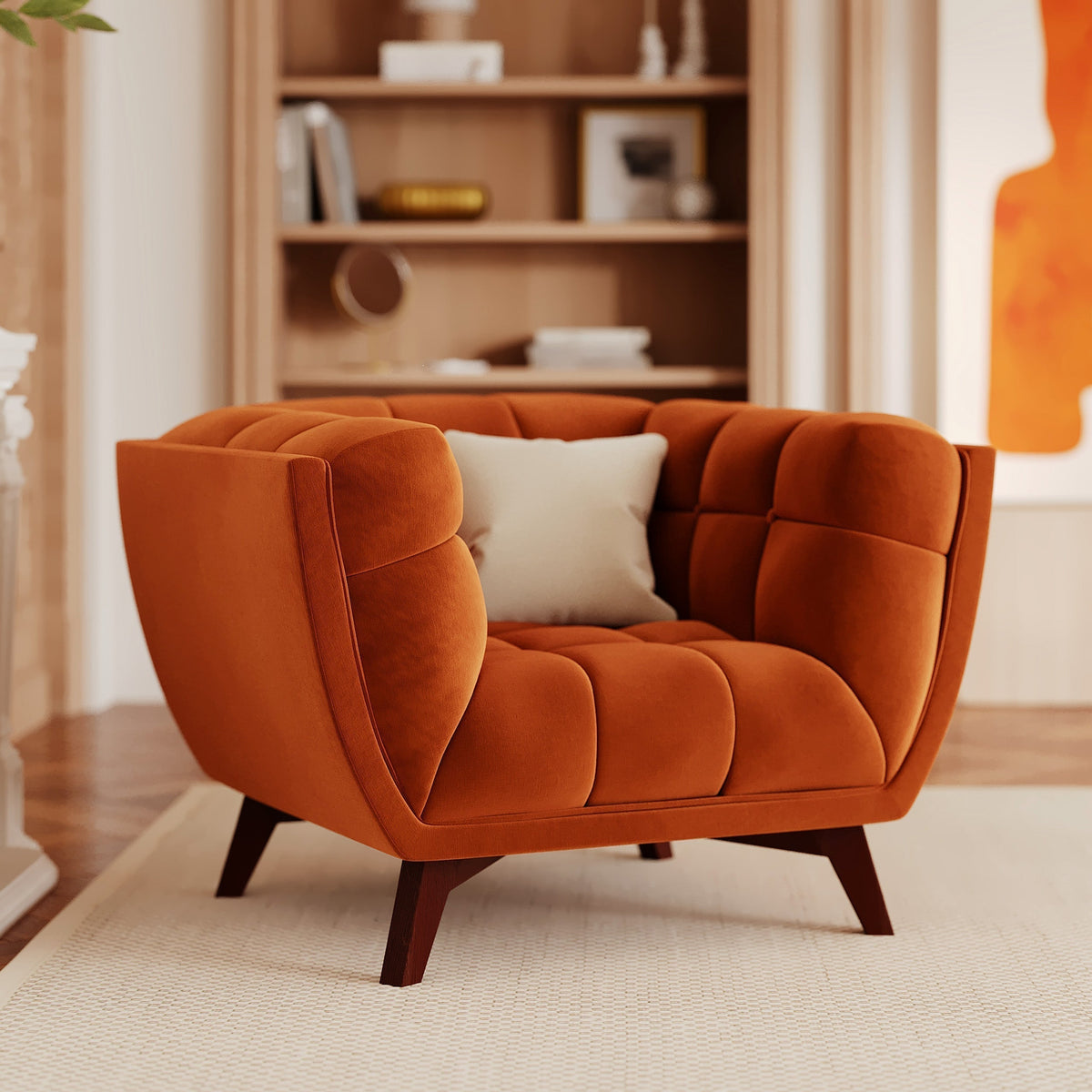
The club armchair is recognisable by its padded seat and enveloping volumes. Traditionally associated with leather, it is also available in other upholstery materials: check the material stated on the product page, as a leather-like appearance does not mean that it is leather.
A club armchair adds character to an office or reading corner. Its armrests and depth can take up space: compare its external footprint with the space actually available for sitting.

The swivel armchair
A swivel armchair lets you change direction without moving the entire seat. In an open-plan living room, it adapts to different moments throughout the day: chatting with someone, watching a film, then turning towards the window.
Leave enough space around it so that the backrest and armrests do not hit the wall or neighbouring table while rotating.
The rocking armchair
A rocking armchair, or rocking chair, adds a rocking motion to the seat. It works well in a bedroom or quiet corner of the living room, for reading or taking a break.
Its placement requires clearance at the front and rear. Also check that the floor is suitable for the base and that the movement remains unrestricted in the intended location.
The outdoor armchair
An outdoor armchair must be expressly designed for outdoor use. Check the materials, finishes and the manufacturer's protection instructions, as well as whether it is intended for sheltered or uncovered use. Cushions may need to be stored separately.
How do you choose a comfortable armchair?
A comfortable armchair primarily suits your body shape and preferred position. A soft-looking appearance is not enough: check the seat depth and height, the backrest and the supports, bearing in mind how much time you will spend in it.
What seat depth and firmness should you choose?
The right seat lets you settle in without having to compensate for its shape. For an upright sitting position, check that you can rest your back while keeping your feet on the floor. A seat that is too deep may force you to move forward and lose the support of the backrest.
If you like to draw your legs up, a wider and deeper seat may suit you better. A firm seat offers a more stable feel, while a soft seat allows you to sink in further. For long reading sessions, above all ask yourself whether you can change position easily.
What seat height should you choose?
The right seat height allows you to sit down and stand up easily while keeping your feet comfortably placed on the floor.
A seat that is too low can make you feel deeply sunk into the armchair, while one that is too high may prevent you from placing your feet properly on the floor. Your height and the way you sit are therefore decisive: there is no ideal height for everyone.
When choosing online, compare the seat height shown on the product page with that of a sofa or armchair you already find comfortable at home. This is a simple reference point for better anticipating your position.
The backrest and back support
The backrest should provide support where you need it, in your usual position. A low backrest supports part of the back; a high backrest can extend this support towards the shoulders, or even the neck depending on your height.
An enveloping shape supports the sides of the torso, while a straighter backrest encourages a more upright posture. To choose a comfortable armchair for your back, consider these support points and the seat depth. No shape alone guarantees freedom from pain.
Do you need armrests and a footrest?
Armrests are useful when they allow you to rest your forearms without raising your shoulders. For reading, check their height and the space remaining between them. Wide armrests can be comfortable, but they sometimes reduce the usable seat width.
A pouf or footrest lets you stretch out your legs to watch a film or relax. Consider the armchair and footrest as a set from the outset to make sure you have enough space.
How can you make an armchair more comfortable?
A well-placed cushion, a pouf and a suitable location can improve comfort. A cushion reduces excessive depth or provides additional support; a throw adds a softer feel. Also place the armchair near lighting suitable for reading.
What dimensions should you allow for your armchair?
Measure the location and the armchair's total footprint before buying. Distinguish the external dimensions from the seat dimensions: thick armrests can take up a lot of space without providing more room to sit.
Pay particular attention to:
- overall width;
- overall depth;
- overall height;
- seat width;
- seat depth;
- seat height.
Then mark out the floor space with masking tape and walk around it. Can you reach the sofa, open a storage unit and get to the coffee table? Allow for the movement required by a swivel, rocking or reclining model, as well as a possible pouf.
Also compare the proportions with those of the sofa and coffee table. Pay particular attention to the backrest height: a very tall armchair draws more attention next to a low sofa.
In a small living room, a compact width, visible legs and a low backrest can make the overall look feel lighter. Nevertheless, keep comfort as your guide: a discreet silhouette must also allow you to sit properly. Finally, check the route through doors, stairways or the lift.
Which material should you choose for an armchair?
Choose the upholstery for its appearance, feel and maintenance requirements. The composition and finish matter just as much as the name of the material: consult the information specific to the model.
Velvet
The velvet armchair provides a soft surface and reflections that make the colour change with the light. Its appearance may vary depending on the direction of the pile. For care, follow the instructions; for combinations, explore our velvet decorating ideas.
Leather
The leather armchair offers a texture whose grain and feel vary according to the finish. Smooth or woven, it can complement contemporary décor as well as a vintage setting. Check the type of leather before cleaning and use compatible products. Our guide to caring for a leather sofa outlines the precautions to adapt to your armchair.
Rattan
Rattan is a material, not a type of armchair: a rattan armchair may therefore also be swivel, rocking or have another shape.
Rattan adds texture through its stems or woven finish. It feels firmer than padded upholstery; cushions can complete the seat. Dust settles in the gaps, which require regular attention.
Also look at whether cushions are included and at the shape of the backrest: lightly padded weaving does not feel the same as a filled seat. Natural rattan alone does not qualify an armchair for outdoor use either.
See our advice on caring for rattan furniture, following the instructions for the model.

Fabric and bouclé fabric
Fabric offers a wide range of finishes, from subtle weaves to raised boucle. Bouclé fabric enhances the volumes and provides a noticeable texture. For everyday use, check the composition, whether the cover is removable and the washing instructions: a removable cover is not necessarily machine washable. Our guide to cleaning a fabric sofa helps identify the necessary precautions.
How can you integrate an armchair into your décor?
To match an armchair with your sofa, choose a common feature or a deliberate contrast. You can repeat a colour, a leg material or a curve without buying two identical seats.
With a plain sofa, a colourful armchair creates a focal point. Repeating its shade in a cushion or poster can link the whole look together. If the sofa already stands out through its colour or pattern, a textured material in a more subtle shade offers another option.
Materials also allow you to vary combinations: rattan beside a fabric sofa, velvet with a wooden table, or leather paired with textiles. For a light atmosphere combining wood and fabrics, discover our Scandinavian living room ideas.

Finally, orient the armchair according to how the room is used. Facing the sofa, it makes conversation easier; near a lamp and small table, it creates a reading corner. Avoid blocking a passage just to achieve a symmetrical layout. Also find our advice on planning your sofa in your living space.
Which armchair should you choose from Maison Pavane?
To choose from Maison Pavane armchairs, start with the need that genuinely matters in your everyday life, then compare the dimensions and materials of the models that meet it.
For reading or creating a quiet corner, focus first on backrest support, armrests and seat depth. A club armchair or a rocking armchair may be particularly suitable for this use.
For furnishing an open-plan living room, a swivel armchair makes it easy to change direction throughout the day without moving the furniture.
If you are short on space, compare the overall width and depth of the models, as well as the thickness of the armrests and the actual usable seat width.
If material is your main criterion, explore our velvet armchairs, leather armchairs or rattan armchairs, then compare the models according to their seating and dimensions.
For a terrace or balcony, go directly to our outdoor armchairs, designed to meet the requirements of outdoor use.
The right choice is therefore made gradually: use, dimensions, comfort, material, then style. This helps you avoid choosing based solely on appearance and find an armchair that is genuinely suited to your everyday life.
Discover all Maison Pavane armchairs.
FAQ: choosing the right armchair
Which armchairs are the most comfortable?
There is no universally more comfortable type of armchair. The right model depends on your body shape and how you use it. Compare in particular the seat depth and height, the backrest shape and the position of the armrests.
What are the different types of armchairs?
The main types of armchairs include club armchairs, swivel armchairs, rocking armchairs and outdoor armchairs. Other names may refer to a particular shape or material: rattan, for example, is a material rather than a type of armchair.
What seat height should you choose for an armchair?
Choose a height that allows you to place your feet comfortably on the floor when sitting back against the backrest. When buying online, compare it with the seat height of an armchair or sofa you already find comfortable.
Which armchair should you choose for a reading corner?
Choose a backrest that supports you in your reading position and armrests on which you can rest your forearms. Add well-directed lighting and, if you like to stretch out your legs, a suitable pouf.
Which armchair should you choose for a small living room?
First compare the overall width and depth of the models. Slim armrests, visible legs and a low backrest can make the armchair feel less imposing. Check the space around the seat before finalising its position.
Which material should you choose for an armchair?
Velvet provides softness and reflections, leather a distinctive texture, rattan a natural look and fabric a wide variety of finishes. Choose between them according to the feel you want, your décor and the model's care instructions.
How can you make an armchair more comfortable?
Add a cushion if you need more support, a footrest to stretch out your legs or a throw for a softer feel. Also check the position of the lamp and side table so that your belongings remain within easy reach.