Everything you need to know about recycled teak
- Recycled teak is reclaimed wood sourced from old beams, roof frames and partitions from Javanese houses, and sometimes from old boats or railway sleepers.
- This material has already stood the test of time: it is naturally dry and very stable, making it ideal for durable furniture indoors and outdoors.
- Each plank is sorted, cleaned, planed and then restored by hand in Indonesia.
- The small wood inserts (wood patches) are not defects: they reflect the craftsmanship and reinforce the structure.
- Choosing recycled teak means no trees are cut and an existing resource is given a new life.
What is recycled teak?
Recycled teak is reclaimed wood sourced from old beams, roof frames and partitions from Javanese houses, and sometimes from old boats or railway sleepers. In Indonesia, specialist suppliers collect these pieces, after which our factories remove nails and screws, strip away old paint and plane the wood to prepare it for the production of high-quality recycled teak furniture.
Teak is the predominant species among the recycled woods used by Maison Pavane. For information about recycled wood as a whole, its origins, benefits and care, see our guide to recycled wood.
This material has already stood the test of time: it is naturally dry and very stable, making it ideal for durable furniture indoors and outdoors.

How is recycled teak restored?
Each recycled teak plank is sorted, cleaned and planed, then restored by hand in Maison Pavane’s partner workshops in Indonesia. Restoration fills old damaged areas with small wood inserts, known as wood patches, taken from the same teak species.
The small wood inserts (wood patches) you may notice are not defects: they demonstrate traditional craftsmanship, reinforce the structure and ensure the furniture’s strength.
What are the quality standards for the inserts?
- The piece fits the shape perfectly (there is no gap).
- The wood grain is aligned and the colour is uniform, with no jarring contrast.
- The insert is flush and smooth, never raised.
- The insert comes from the same teak species.
- An insert is never placed on the edge or corner of a piece of furniture.
- The size and spacing of the inserts are proportionate: neither too large nor too close together.
The result: a restoration that is smooth to the touch and visible to the trained eye—the signature of an authentic recycled teak piece of furniture.
What does recycled teak look like?
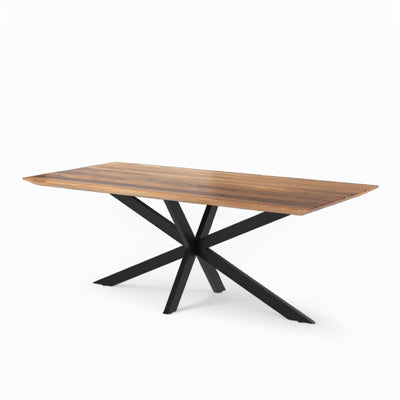
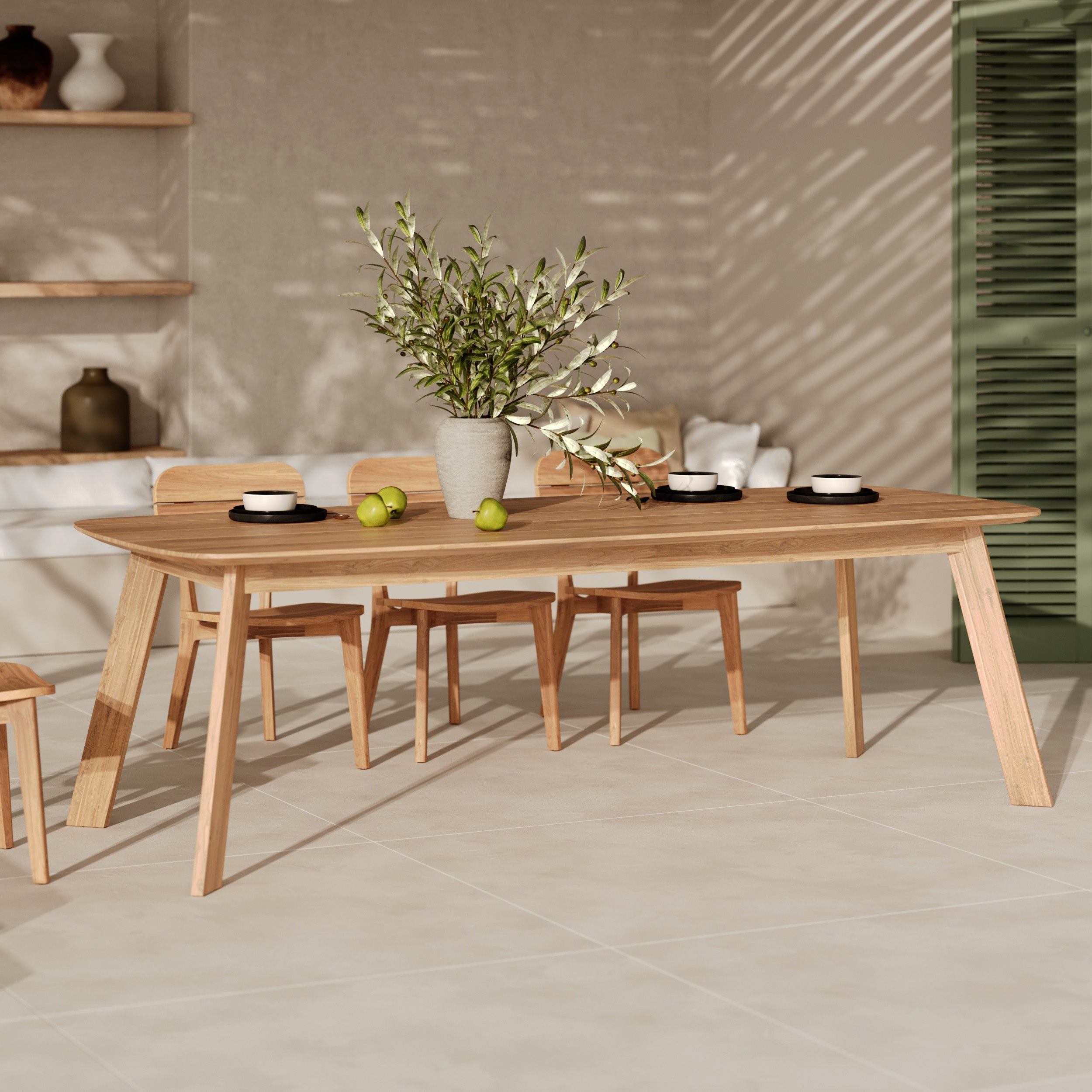
Recycled teak has a warm, slightly greyish brown tone, darker than new teak, which is often more yellow. It warms up interiors and terraces while retaining subtle signs of its past: old nail marks, slight variations in tone and patina. No two pieces are identical.
Planing does not mean erasing its history. These marks are deliberately preserved because they tell the story of the plank’s previous life.
No two pieces are identical: that is precisely what gives them their charm and character.

Is recycled teak more stable than new teak?
Yes. Because it has already been used and dried for decades, recycled teak is less sensitive to changes in humidity and temperature than new teak, which is still “living”. It therefore cracks and warps less, including outdoors.
In practical terms:
- Fewer drying-related cracks
- Excellent durability over time, even outdoors
- Less warping and excellent stability
Outdoors, like all wood, it naturally turns grey: an aesthetic phenomenon with no impact on its durability.

Is recycled teak an eco-friendly choice?
Choosing recycled teak means cutting down no trees and giving an existing resource a new life. Our partners in Indonesia ensure the traceability of supplies in accordance with the European Union Timber Regulation (EUTR) and the European Union Deforestation Regulation (EUDR).
In her interview, our product designer explains where our wood comes from and how we audit our suppliers.
Our furniture arrives with two coats of protective varnish. As teak is naturally resistant, care remains simple. For more information, see our guide to outdoor teak care.
Recycled teak: the key points
| Benefit | Explanation |
|---|---|
| ♻️ Eco-friendly | Reclaimed wood, with no tree felling |
| 🪵 Strong and stable | Already dry, meaning fewer cracks |
| 🎨 Authentic | Each piece is unique |
| 💪 Durable | Resistant to the elements and the passage of time |
| 🇮🇩 Handcrafted | Carefully restored in Indonesia |
FAQ: recycled teak, care, durability and inserts
What exactly is recycled teak?
It is teak wood that has already been used, recovered from old beams, roof frames and partitions from Javanese houses, then cleaned and planed to make new furniture.
Is recycled teak as durable as new teak?
Yes, and often more stable thanks to its age and natural drying process.
Why are visible inserts (“patches”) present?
These inserts repair old damaged areas (nails and holes) and reinforce the material. They meet strict standards: uniform colour, aligned grain, flush surface and the same teak species.
Are there pests in recycled teak?
Recycled teak is old, dry and cleaned: everything pests dislike.
Does recycled teak turn grey outdoors?
Yes. Outdoors, like all wood, it naturally turns grey: an aesthetic phenomenon with no impact on its durability. Maison Pavane furniture is delivered with two coats of protective varnish.
Looking for durable recycled teak furniture with a story to tell?

Explore our collections: Bana, Marie, Lumo, Nonza, Molo, Bora, Siam, Kouma.
For an overview: our garden tables, our garden lounge sets and all our teak furniture.