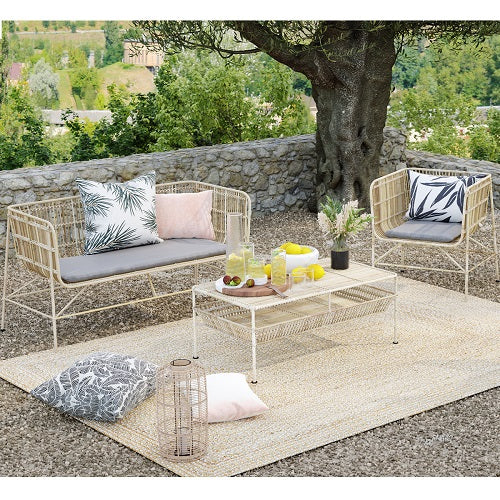
The essentials of caring for a rattan piece of furniture
- Dust weekly with a vacuum cleaner and a microfibre cloth: this is the first step in any rattan care routine.
- Clean once a week with a damp sponge and Marseille soap or lemon juice, then leave to dry.
- For a dirty rattan armchair: use a nylon brush, Saint-Marc laundry detergent (2 tablespoons per litre of water) or baking soda (1 teaspoon per litre of lukewarm water), then rinse with clean water.
- Condition dry and brittle rattan with 1 litre of hot water, 1 tablespoon of turpentine and 3 tablespoons of linseed oil, applied with a brush.
- Protect natural rattan with a clear varnish for wood and rattan, and cover outdoor furniture during winter.
Long confined to the mythical Emmanuelle armchair and famous “sun” mirrors, rattan has reinvented itself to our great delight and earned a place of choice in our homes, bringing a bohemian and cosy touch to your décor. Now very much on trend, we love it, and we know exactly why: robust and natural, at Maison Pavane rattan comes in a wide range of designs (chair, armchair, coffee table, bench, mirror, basket, lampshade, lamp) that will fit perfectly both indoors and outdoors.
Rattan belongs to the palm family: it is a solid wood with a fibrous core that grows in the tropical forests of Southeast Asia. You will quickly see this if you adopt it: over time, your appreciation for rattan will not fade. Thanks to its understated style and “natural” appearance, it will blend perfectly into your living room or on your terrace. While rattan is a durable and timeless décor material, it requires regular care to last longer and retain all its beauty. So remember to take good care of and protect your rattan furniture. There are many tips and techniques to help you do this! Follow our guide for simple and effective advice on caring for your rattan furniture.
How do you care for and clean your rattan furniture?
To care for a rattan piece of furniture, dust it with a vacuum cleaner and a microfibre cloth, then at least once a week wipe it with a sponge moistened with Marseille soap or lemon juice, and leave it to dry. This regular cleaning is enough to preserve rattan’s natural appearance and prevent any risk of deterioration.

Before starting a thorough clean of your rattan furniture, the first—and one of the most important—steps is dusting. To do this, simply dust the surface of your furniture regularly with a vacuum cleaner or a microfibre cloth. The vacuum cleaner is the quickest solution and rapidly removes dust that has accumulated on the surface of your rattan furniture. Using a cloth will allow you to reach narrower corners. The combination of a vacuum cleaner and microfibre cloth is the winning duo for thoroughly dusting your rattan.
For proper care of your rattan furniture, the best solution is regular cleaning. At least once a week, wipe it with a sponge moistened with Marseille soap or lemon juice and leave it to dry.
Another useful tip for properly cleaning and caring for your rattan furniture is to scrub vigorously with a nylon brush:
- using Saint-Marc laundry detergent, at a rate of 2 tablespoons per litre of water,
- or using baking soda in lukewarm water, at a rate of 1 teaspoon per litre of water.
Rinse everything with a damp sponge and clean water, then leave it to air-dry. In conclusion, regular care is THE solution that guarantees a long life for your rattan furniture and prevents any risk of deterioration, thanks to easy and regular cleaning.
How do you care for and clean outdoor rattan garden furniture?
Rattan garden furniture is cleaned in the same way as indoor furniture, with two additional treatments: a bleaching solution (water and lemon juice, or water and hydrogen peroxide) for rattan that has turned grey in the sun, and a treatment with white vinegar or ammonia to combat mould.
Cleaning and caring for your garden furniture marks the arrival of warmer days and gets the good-weather season off to a great start. To care for your lovely rattan garden furniture, a few tips will be useful. Outdoors, rattan garden furniture is unfortunately exposed to many weather conditions. Often left outside even when it rains or during winter, it has to withstand snow, frost and even sunlight.
In addition, if your furniture has been left outside in direct sunlight for too long and has become slightly greyish, apply a bleaching solution made from the following ingredients:
- water + lemon juice,
- water + hydrogen peroxide, using 4 to 5 teaspoons per litre of water.
You should also be aware that the sofa and armchair in your outdoor rattan garden set may develop mould stains or be affected by woodworm. Don’t panic! Simply treat them with a fungicidal insecticide such as Les Frères Nordin and a bristle brush, following the instructions for use. Fifteen days later, inject the product with a syringe into the visible holes. As a preventive measure, treat the healthy areas too.
To remove all unwanted mould from your rattan furniture, you can also simply apply white vinegar with a sponge or cloth, or a few drops of ammonia mixed with cold water and soda crystals. There is no need to worry, as these products do not remove the natural colour of your rattan garden furniture.
How do you condition brittle and dry rattan?
To condition dry rattan, mix 1 litre of hot water, 1 tablespoon of turpentine and 3 tablespoons of linseed oil. Apply this mixture to the rattan furniture with a brush, leave it to dry, then polish with a soft cloth. Linseed oil used on its own and buffed with a cloth also produces good results.
Over the years, the fibres of your rattan furniture may become brittle, and if your rattan armchair starts to creak, this means that the fibres have become too dry.
If this is the case with one of your rattan pieces of furniture, here is the solution: a useful traditional recipe to know for cleaning, but above all conditioning, rattan is to mix 1 litre of hot water with 1 tablespoon of turpentine and 3 tablespoons of linseed oil. Apply this mixture with a brush. Leave it to dry, then polish with a soft cloth.
Another equally nourishing and effective solution for excessively dry rattan is an almost age-old method: simply use linseed oil and buff it with a cloth.
How do you protect natural rattan?
The go-to product for protecting natural rattan is clear varnish for wood and rattan, applied with a brush. Linseed oil and paint also provide protection. For a rattan piece of furniture left outside during winter, covering it with a protective cover provides additional protection.

A rattan piece of furniture kept inside a house or flat all year round will of course be less likely to deteriorate than one kept outdoors. Nevertheless, it should be maintained regularly to ensure its longevity.
To protect your rattan furniture, linseed oil or a coat of paint are known to provide protection for this type of material. However, the go-to protection product is clear varnish for wood and rattan, applied with a brush, providing a perfect, natural finish for a seat placed outdoors.
Tip: If you have decided to install your rattan furniture outdoors, do not hesitate to cover it with a protective cover during winter. This will protect it and allow you to find your rattan furniture in perfect condition when warmer days return.
How do you renovate and refresh a rattan set (chair, armchair, sofa and coffee table)?
Renovating a rattan set involves three steps: dusting, deep cleaning, then a finish of your choice. Paint or a stencil can give it a new look, linseed oil and turpentine can restore its shine, and a strand of rattan inserted into a gap can repair missing sections.
Rattan is widely used to make lightweight, stylish and easily movable furniture, making it a popular choice for living-room furnishings. These are pieces that we do not necessarily replace regularly but that can easily be renovated to give them a new lease of life or create a different atmosphere in your home. Here are the important steps:
To paint your rattan furniture:
- To refresh your rattan set, whether varnished or not, renovation starts with dusting (see our advice above). You can then move on to a deeper clean, before thinking about restoring its shine and lustre with a natural or varnished finish, or adding colour with paint.
- After cleaning and removing ingrained dirt, you can completely change the look of your rattan furniture according to your tastes and preferences by applying a coat of paint of your choice or using particular stencil patterns.
To restore shine and lustre to your rattan:
- Give priority to linseed oil, turpentine and even hydrogen peroxide, which will give your dull rattan furniture a fresh, renewed look.
To repair your rattan furniture:
Some repairs can easily be carried out on rattan. For a small gap, simply thread a strand of rattan through the empty space in the same direction as the existing rattan fibres. Finish by forcing the end of the strand between two of them. You can also customise your rattan furniture by adding ribbon or fabric.
Feel free to add a few cushions in the colour of your choice to your rattan sofa or armchair to give it a new look.

FAQ: your questions about rattan care
How do you clean a rattan armchair?
Dust the rattan armchair with a vacuum cleaner, then use a microfibre cloth for narrow corners. Next, wipe it with a sponge moistened with Marseille soap or lemon juice. For heavier dirt, scrub with a nylon brush and Saint-Marc laundry detergent (2 tablespoons per litre of water), rinse with clean water and leave to air-dry.
How do you clean varnished rattan?
Varnished rattan is cleaned like natural rattan: dust with a vacuum cleaner, then use a damp sponge and Marseille soap without soaking the fibres. Clear varnish for wood and rattan protects the surface and can be reapplied with a brush during renovation, after dusting and deep cleaning.
How often should you care for a rattan piece of furniture?
At least once a week for routine cleaning: wipe it with a sponge moistened with Marseille soap or lemon juice, then leave it to dry. Dusting with a vacuum cleaner or microfibre cloth should also be done regularly. Consistency, more than the method, is what guarantees rattan a long life.
How do you deal with mould on rattan garden furniture?
Apply white vinegar with a sponge or cloth, or use a few drops of ammonia mixed with cold water and soda crystals. These products do not remove rattan’s natural colour. In the event of woodworm, treat the furniture with a fungicidal insecticide such as Les Frères Nordin, then inject the product with a syringe into the visible holes fifteen days later.
Why is my rattan armchair creaking?
A creaking rattan armchair indicates that the fibres have become too dry. Condition them with a mixture of 1 litre of hot water, 1 tablespoon of turpentine and 3 tablespoons of linseed oil, applied with a brush. Leave it to dry, then polish with a soft cloth.
Rattan is more than ever a fashionable favourite in our indoor and outdoor spaces, so caring for it is more relevant than ever. To ensure that your rattan furniture retains its beautiful natural appearance, it is essential to maintain it and, as you have just read, nothing is really difficult: it is all about consistency and method to make your rattan furniture last.
Want to start shopping for rattan furniture,
discover our rattan collections.